
MORGANTOWN, West Virginia — There was a time when seeing West Virginia in the AP Top 25 was almost expected. The Mountaineers weren’t always competing for a national championship, but they were nationally relevant. They played in huge games, beat ranked opponents and were a program that the rest of college football had to pay attention to.
That feels like a long time ago now.
A graphic circulating this week shows just how far West Virginia football has fallen nationally. The Mountaineers have now missed 117 consecutive AP Top 25 polls, the second-longest active drought among Power Four programs. Only Rutgers, at an almost unbelievable 218 polls, has gone longer. Stanford is right behind WVU at 115, followed by Maryland at 114 and Cal at 112.
West Virginia’s last appearance in the AP Top 25 came at the end of the 2018 season. Since then, an entire generation of college football players has essentially come and gone without seeing WVU ranked.
That’s not acceptable for this program.
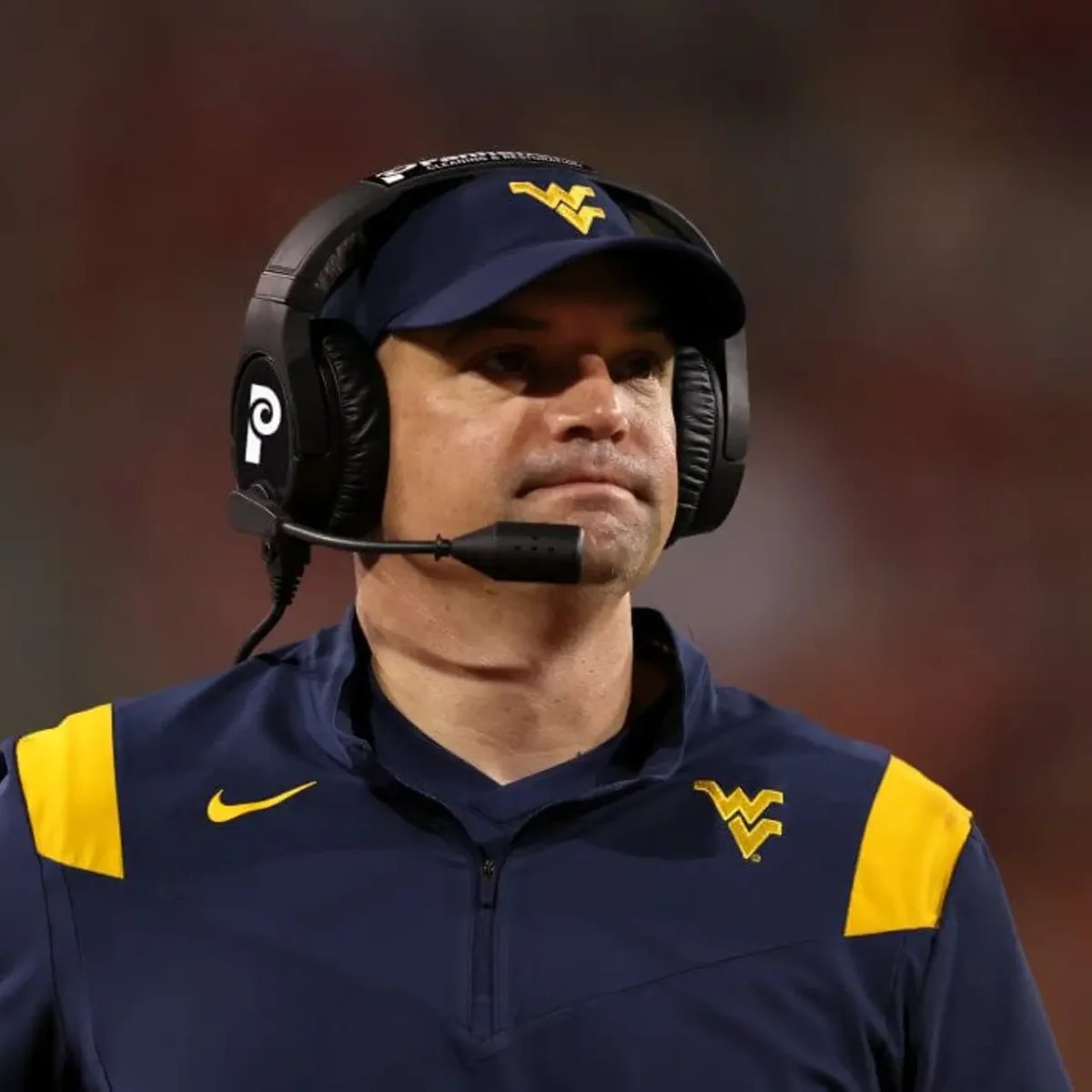
And while there are plenty of reasons for West Virginia’s decline, it’s impossible to look at that number without pointing directly at the Neal Brown era. Brown took over in 2019 and coached six seasons in Morgantown. During those six years, West Virginia never appeared in the AP Top 25. Not once. Brown finished his WVU career just 37-35 overall, and his best season came in 2023 when the Mountaineers went 9-4 and beat North Carolina in the Duke’s Mayo Bowl.
Brown was a good representative of the university off the field, and by all accounts he ran the program the right way. But ultimately, college football is about winning, and West Virginia simply didn’t win enough meaningful games during his tenure.
The Mountaineers became painfully average.
That’s probably the biggest issue with what happened under Brown. West Virginia didn’t completely bottom out. Instead, the program slowly became comfortable living somewhere around .500. There were enough wins to create hope and enough losses to prevent the program from ever building real momentum. In six seasons, Brown surpassed six regular-season victories only once. WVU went from a nationally recognizable program to one that barely registered outside of the state.
The numbers against quality competition were particularly damaging. Brown went just 4-17 against teams that were ranked at the time WVU played them, according to a review of his tenure, and West Virginia had zero weeks ranked in the AP Poll under him.
That’s how you end up on a graphic like this.
Which CFB team breaks their AP drought first? pic.twitter.com/9qodWfvE5P
— BetMGM 🦁 (@BetMGM) August 18, 2026
College football is changing faster than ever. The transfer portal, NIL, revenue sharing and the expanding power of the biggest programs have created an environment where falling behind can become permanent if you’re not careful. Players growing up today don’t remember Pat White and Steve Slaton destroying Georgia in the Sugar Bowl. They don’t remember WVU being ranked No. 2 in the country. They don’t remember three straight 11-win seasons or the Mountaineers beating Clemson 70-33 in the Orange Bowl.
They know what West Virginia is right now.
That’s why the return of Rich Rodriguez is about much more than nostalgia. Rodriguez has been brought back to make West Virginia nationally relevant again. During his first run in Morgantown, WVU became one of the most exciting programs in the country and produced three consecutive Top 10 finishes. That’s the standard this program needs to start chasing again.
Nobody should expect Rodriguez to magically turn West Virginia into a national championship contender overnight. College football is completely different than it was when he left Morgantown after the 2007 season. But WVU desperately needs to start winning meaningful games again. It needs to beat ranked teams. It needs to compete near the top of the Big 12. And, yes, it needs to see those two familiar letters — WV — beside a number in the AP poll again.
Because 117 straight polls without West Virginia is already bad enough.
If that number continues climbing, the concern becomes bigger than an embarrassing graphic. At some point, you’re no longer talking about a proud program going through a rough stretch. You’re talking about a program that has become irrelevant nationally.
West Virginia has too much tradition, too passionate of a fan base and too much history for that to happen.
Neal Brown inherited a program coming off an eight-win season and left six years later without WVU ever cracking the AP Top 25. Fair or not, that drought will be a significant part of his legacy in Morgantown. Now it’s Rich Rodriguez’s responsibility to end it.
And the sooner the better.
West Virginia doesn’t need to live in the past.
But it desperately needs to become relevant again.